SAROS: THE BEAUTIFUL DEFIANCE OF A SOUL AT ODDS WITH ITS GENRE
The Identity Crisis of Housemarque: Why Saros Struggles to Step Out of Returnal’s Shadow
In 2017, the gaming world received a blunt wake-up call. Shortly after the launch of Matterfall, developer Housemarque posted a candid, all-caps blog entry titled “ARCADE IS DEAD.” For a studio that had spent two decades perfecting twin-stick shooters like Resogun and Nex Machina, it was a seismic shift. They promised to move toward new horizons, and the result was 2021’s Returnal—a haunting, high-octane masterpiece that successfully married third-person bullet hell with punishing roguelike mechanics.
Fast forward to 2026, and we have Saros. Positioned as a spiritual successor to Returnal, it carries the same sleek Housemarque DNA: responsive controls, breathtaking particle effects, and an eerie Lovecraftian atmosphere. However, in an attempt to rebuke the very foundation that made their previous hit a cult classic, Housemarque has delivered a game that feels at war with itself. By hollowing out the roguelike elements to broaden its appeal, Saros reveals the danger of trying to please everyone at once.
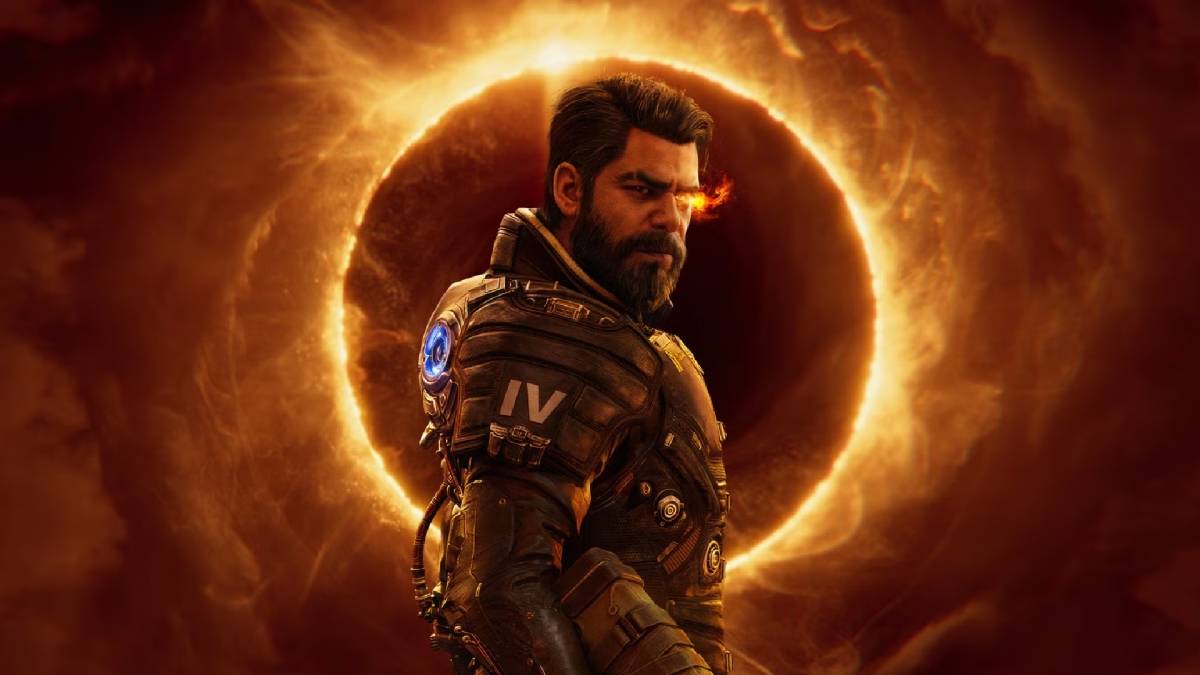
A Genre That Refuses to Be Named
Technically, Saros is a roguelike. It features cycling levels, randomized weapon drops, and permanent skill tree progression. Yet, Housemarque leadership has been curiously evasive about these labels. Art director Simone Silvestri recently described genres as "ephemeral," while creative director Gregory Louden admitted the game has "rogue elements" but stopped short of fully committing to the term.
This evasiveness isn't just a marketing quirk; it’s a design philosophy that has resulted in a debilitating lack of decisiveness. A team doesn’t need to follow every rule of a genre to succeed, but in Saros, the hesitancy to embrace the roguelike structure has left its core systems feeling stunted and shallow.
The Death of the "God Run": Build Variety vs. Static Stats
The magic of a great roguelike—think Balatro, Slay the Spire, or Hades II—lies in the synergy of variables. The thrill of accidentally crafting a "godlike" build through a unique combination of perks and items is what keeps players coming back for "just one more run."
Saros fundamentally fails to deliver this high. While the game provides powerful abilities, it lacks powerful builds.
- Small Perk Pool: The available upgrades rarely interact with each other in meaningful ways.
- Linear Progression: Instead of the spontaneous interplay found in Returnal’s parasites or malfunctions, Saros offers a massive, dull skill tree filled with minor stat bumps (e.g., +2% health, +5% reload speed).
- Hollow Mechanics: Powerful roguelikes give players control over their chaos; Saros simply hands you a gun and asks you to shoot straighter.
When you take away the ability to "break" the game with a clever build, you take away the core incentive of the genre. Saros maintains the trappings of a roguelike but removes the heart that makes the blood pump.
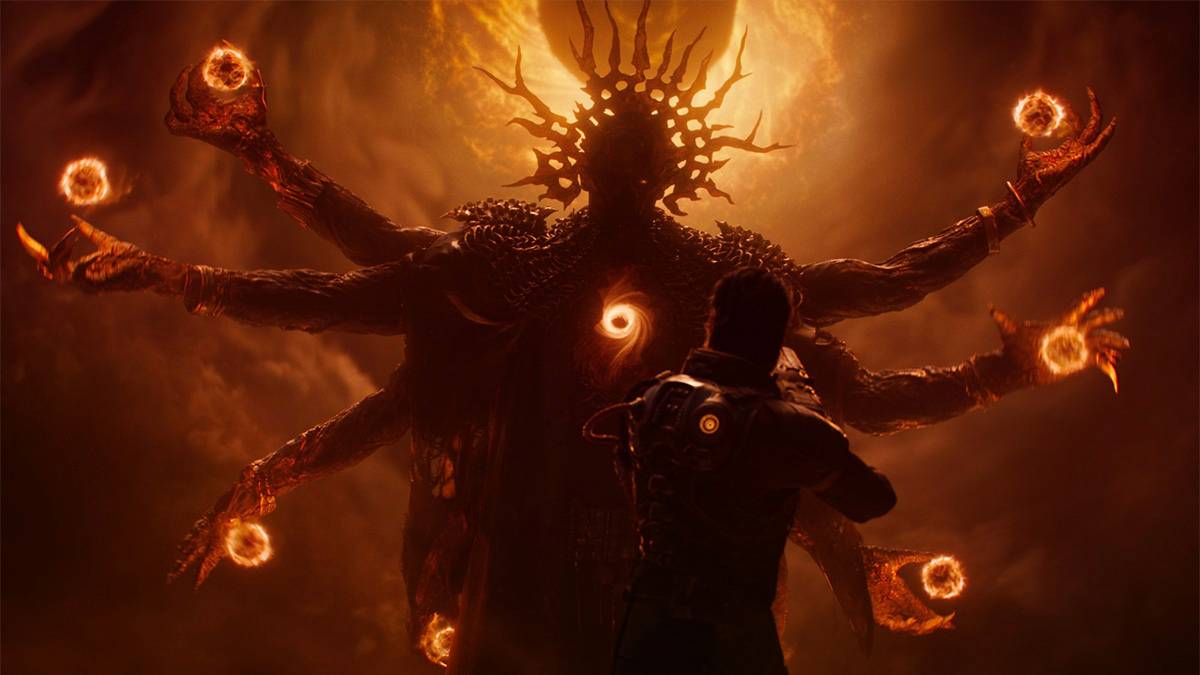
The Complexity Downgrade: What Saros Lost
To understand why Saros feels like a step back, one only needs to look at what was left on the cutting room floor. Returnal’s Atropos was a living, breathing ecosystem of risk and reward. It featured:
- Item Fabricators and In-run Currency: Strategic shops that required careful Lucenite management.
- Parasites and Malfunctions: Dynamic trade-offs that forced players to weigh a temporary debuff against a massive buff.
- Secret Rooms and Reclaimers: Environmental puzzles and "gambling" mechanics that kept every run feeling fresh.
Saros includes none of these. In their place is the aforementioned skill tree, which attempts to replace dynamic, run-based creativity with stagnant, long-term grinding. Scaling back these interlocking systems has a cascade effect: without Lucenite to spend, there’s no need for stores; without stores, there’s no need to hunt for currency; without parasites, there’s no room for turning a disadvantage into an advantage. Creativity is sacrificed on the altar of "approachability."
The "Approachability" Paradox
Housemarque has stated that they wanted Saros to be more approachable than Returnal. Making games more accessible is a noble goal—titles like Lost in Random: The Eternal Die and Hades 2 have successfully implemented assists and God Modes. However, Saros attempts to achieve approachability by stripping away the very logic that makes the genre work.
The Broken Difficulty Curve
One major "quality of life" feature in Saros is the ability to warp past cleared biomes straight to new ones. While this prevents players from getting stuck on early levels, it shatters the game’s difficulty curve.
- Teleporting: Jumping straight to a late-game biome often leaves the player under-geared against "spongy" enemies.
- Full Runs: Starting from stage one turns the player into an unstoppable god because weapons gain power through kill counts.
This creates a binary experience: the game is either tediously hard or trivially easy. By sanding down the "prickly" edges of Returnal—where players were forced to restart and master the curve—Housemarque has inadvertently created a more frustrating experience.
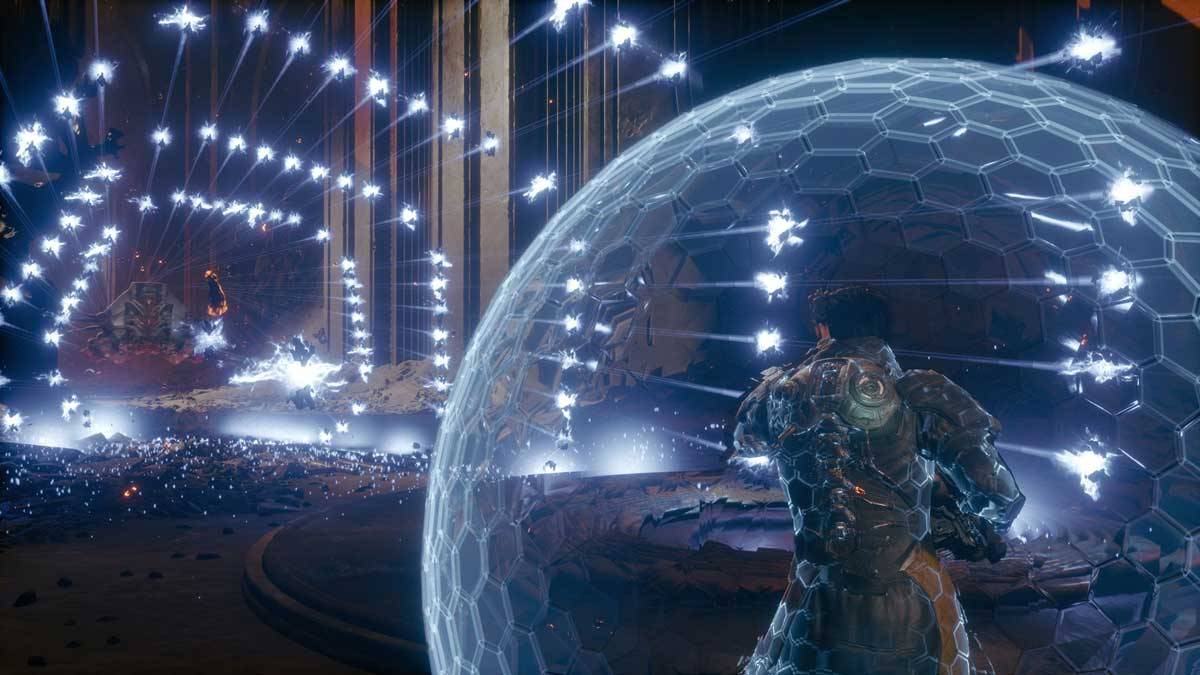
Ludonarrative Dissonance: The Story vs. The Loop
Warning: Spoilers ahead for Returnal and Saros.
The best story-driven roguelikes use the "loop" to reinforce their themes. In Returnal, Selene is trapped in a cosmic purgatory, her endless deaths mirroring her inability to escape the guilt of her past. The narrative demands the loop; the loop justifies the narrative.
Saros follows Arjun, a protagonist ruminating on failure. However, the game’s "true ending" sees Arjun find peace, shunning his anger and reconciling with the woman he’s been chasing. It’s a definitive, peaceful conclusion. Yet, as soon as the credits roll, the player is jettisoned right back to the start. The story says Arjun is free, but the gameplay says he is still trapped. Unlike Returnal, Saros doesn't reckon with this disconnect, leading to a conclusion that feels narratively hollow.
Final Verdict: Boldness vs. Catering
It’s tempting to say Housemarque should have just made Saros a linear third-person shooter. But that’s a surface-level fix. Returnal was special because it was a roguelike, not in spite of it. It brought AAA production values to a niche space and succeeded because it was bold.
Saros reviewed well upon its 2026 release, but it feels destined to fade from our collective memory much faster than its predecessor. Housemarque is a studio that thrives when it’s pushing boundaries—whether that’s "Arcade is Dead" or "Roguelike is the Future." By attempting to cater to every crowd at once, they have delivered a sequel that is easier to digest but significantly harder to love.
| Feature | Returnal (2021) | Saros (2026) |
|---|---|---|
| Build Depth | High (Parasites, Malfunctions) | Low (Stat Upgrades) |
| Difficulty | Challenging but smooth curve | Erratic (Too easy/Too hard) |
| Risk/Reward | Central to gameplay | Virtually non-existent |
| Narrative Sync | Perfect thematic alignment | Conflicting ending |
Housemarque doesn't need to write a blog post saying "The Roguelike is Dead," but with Saros, they certainly acted like they believed it. For the fans who fell in love with the punishing brilliance of Atropos, we can only hope their next project recovers that missing conviction.