Bubsy 4D Review: A Nostalgic Trip Forward That Can’t Quite Outrun Its Wonky Physics
Bubsy 4D Review — Is the World's Most Infamous Mascot Platformer Actually Good in 2026?
Read our definitive, 1,500-word Bubsy 4D review! Discover if Fabraz's 2026 retro revival on PS5 and Switch fixes the franchise's clunky history, or if wonky physics and floaty controls ruin the wooly fun.
The year 2026 has been a nostalgic golden era for independent character revivals, but few announcements raised as many skeptical eyebrows as the return of gaming's most famously failed mascot. First bursting onto the scene in 1993 during the peak of the 16-bit mascot gold rush, the fast-talking bobcat became synonymous with flawed platforming mechanics. Following a catastrophic 3D disaster in 1996 and a couple of brief 2D side-scrolling experiments in 2017 and 2019, publisher retro initiatives locked down May 22, 2026, as the official launch date for Bubsy 4D.
Developed by the highly talented team at Fabraz—renowned for their airtight platforming precision on titles like Slime-san—this ambitious project attempts the absolute impossible: transforming a franchise defined by clunky history into a smooth, expressive 3D space. Available globally across PC, PlayStation 5, Xbox Series X|S, Nintendo Switch, and the next-generation Nintendo Switch 2, *Bubsy 4D* is fully self-aware of its polarizing reputation. It leans heavily into late-90s cartoon energy, non-stop meta-humor, and vibrant visuals. In this 1,500-word comprehensive review, we dive deep into the newly engineered physics engine, the structural pacing of its open-ended planets, and whether this chaotic bobcat can finally stick a landing or if his controls are still stuck in the past.
The Narrative Setup: Out with the Woolies, In with the Baabots
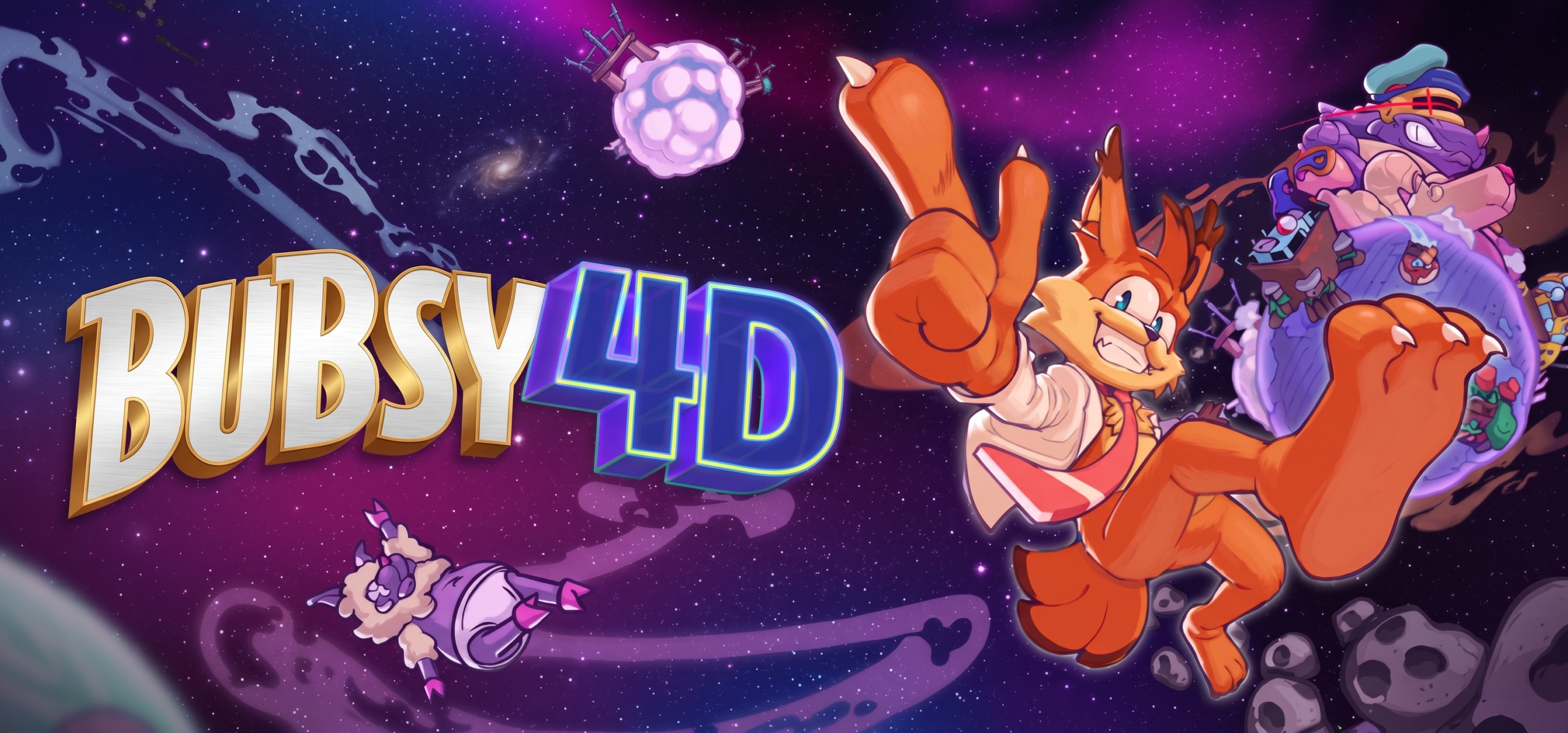
If there is one absolute consistency across this franchise's history, it is that our protagonist loves getting dragged into planet-ending crises he completely wants no part of. *Bubsy 4D* masterfully embraces this "too old for this" charm right from the opening cinematic vignette. The overarching plot centers around a classic heist: the legendary, ultra-powerful Golden Fleece has been stolen from its secure cosmic resting place, threatening the stability of multiple solar systems.
However, the culprit behind this multi-galaxy robbery introduces a brilliant narrative twist. Instead of relying on the series' traditional extra-terrestrial adversaries, the Woolies, a terrifyingly efficient mechanical empire has taken over the primary villain spotlight: The Baabots. These robotic sheep creatures are exactly what you expect—ruthless, automated tyrants who have systematically enslaved the local alien populations. As you explore the open-ended stages, you will encounter classic Woolies bound by literal balls and chains, humorously reminiscing about their old glory days as independent space raiders before the automated sheep workforce took over.
The Dialogue Matrix: Meta-Humor and Vocal Fatigue
While the bobcat himself is desperate to return to a lazy afternoon of doing absolutely nothing, his support crew has other ideas. Legendary companion assets like Oblivia, Dr. Virgirl, and his hyper-active twin nephews Terry and Terri have already locked coordinates to track down the robotic fleet. The narrative structure serves as a fast-paced, lighthearted canvas to bounce characters across colorful worlds. The general pacing of the cinematic cutscenes is remarkably sharp, delivering genuine laughs through self-aware scriptwriting.
The Reality of Constant Commentary
Where the writing will absolutely divide the modern 2026 gaming market is the sheer, uncompromised frequency of the main character's vocalized commentary. He talks continuously throughout every single phase of the application loop.
- Menu Interactivity: Pausing the game prompts custom voice lines mocking the player's hesitation; adjusting your audio sliders or graphical settings triggers rapid-fire puns regarding the hardware configuration.
- Algorithmic Defiance: The writing hits its comedic peak when leaning heavily into modern technology meta-jokes, such as Bubsy staring down a robotic enemy and shouting, *"What are you gonna do? AI-generate a threat to me?"*
- Vocal Saturation: While retro enthusiasts who grew up with '90s cartoons will find the dad-joke energy incredibly endearing, casual platforming fans may find the endless stream of non-stop chatter exhausting over prolonged, multi-hour play sessions.
The Platforming Engine: An Ambitious Move-Set Meets Inconsistent Physics
At its baseline structural level, *Bubsy 4D* functions as a classic, highly intuitive collect-and-reach platformer. Your primary objective across each planet is to navigate complex mechanical layouts, hoard stray yarn balls, and secure the piece of the Golden Fleece waiting at the absolute end of the sector. Once a level is logged, you can jump back in at any time to gather missed secrets or shave off fractions of a second in dedicated speedrun challenges.
To facilitate this journey, Fabraz has outfitted the feline hero with a remarkably versatile, highly agile movement kit. He can run at intense speeds, double-jump, execute a long-range horizontal glide utilizing his shirt, and climb up sheer vertical surfaces. Encountering a patrolling Baabot can be handled by executing a precise targeted pounce. If an environmental obstacle is positioned too high, you can run directly up a wall for a fixed duration before leaping upward. Furthermore, you can trade your hoarded yarn balls at a dedicated shop run by Terry and Terri to unlock powerful endgame modifications, such as the devastating *Vortex Spin* move.
The Hairball Transition: Navigating the Chaos
The most unique mechanic added to the 3D traversal loop is the capacity to dynamically collapse into a high-speed rolling hairball, transforming the game from a standard platformer into a momentum-based physics challenge reminiscent of classic pinball games. When this state is activated, your movement speed multiplies dramatically, allowing you to blast across loops, rocket off half-pipes, and cross massive environmental gaps with absolute ease.
However, it is within these hyper-fast physics sequences that the momentum-based gameplay engine encounters its primary mechanical hurdle. While rolling around at high velocities sounds incredibly fun on paper, the execution is severely undercut by a wonky, unpredictable camera tracking script and slightly floaty controls. Even with a dedicated drop-shadow indicator rendered underneath the character model—a smart modern visual addition inspired by titles like *Crash Bandicoot 4: It's About Time*—the erratic camera shifts make calculating distance or landing precise jumps after a high-speed launch incredibly frustrating.
During our testing on the PlayStation 5, activating the R2 speed booster while in hairball mode would frequently cause the trajectory vector to warp unexpectedly. Instead of maintaining a clean, predictable line across a narrow bridge, the character would drift outward or execute a sudden lateral jump into a bottomless pit, leading to unnecessary deaths that feel completely untethered from the player's actual inputs. Unless someone slipped a volatile substance into the bobcat's water bowl, there is simply no mechanical justification for why a trained feline protagonist should struggle this much to run in a straight line.
The 2D Salvation: Tighter, Fluent Retro Infiltrations
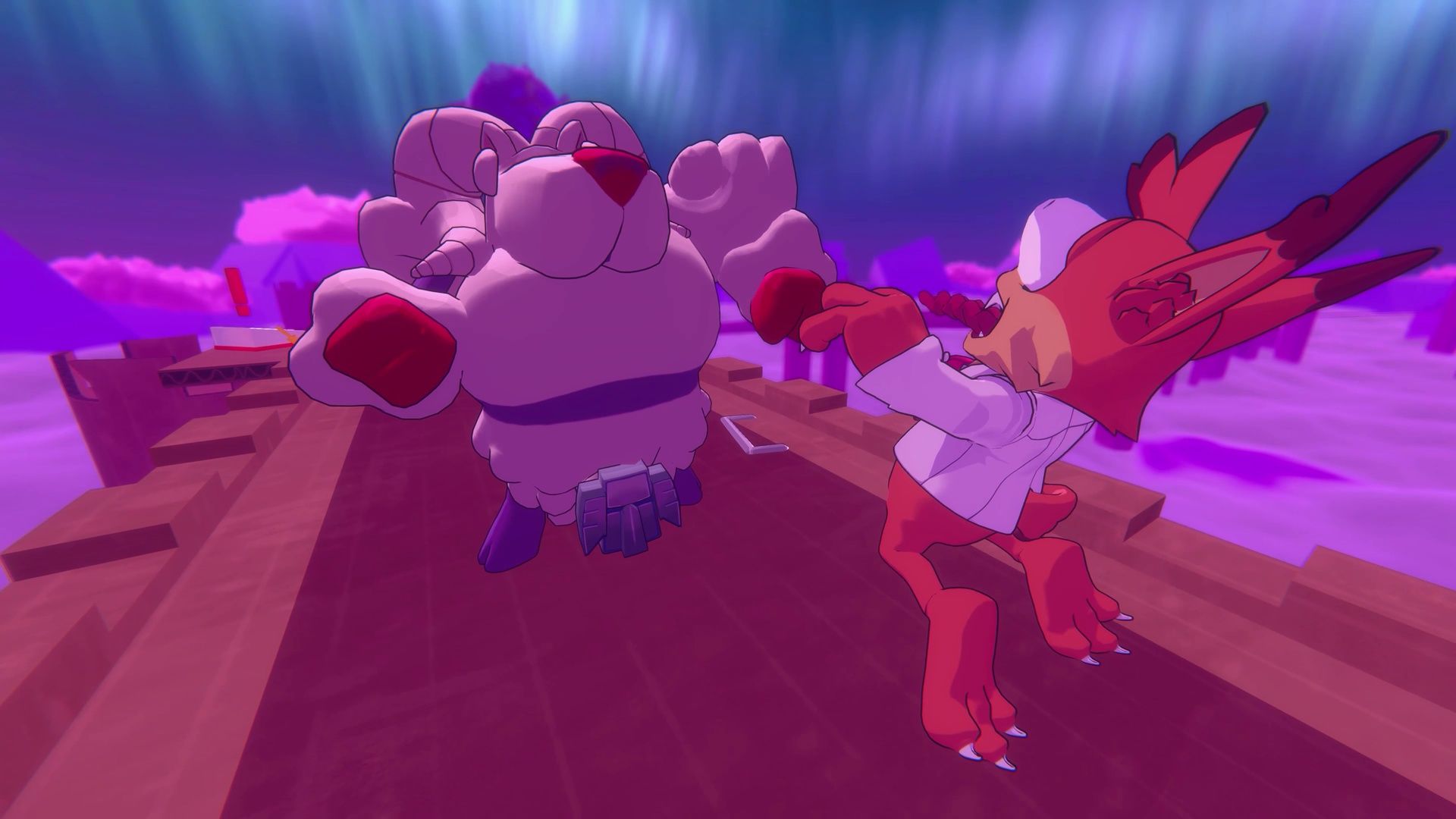
Fortunately, the structural frustration of the 3D levels is beautifully balanced by a brilliant creative choice: the introduction of pure 2D side-scrolling sections starting on the second planet campaign. When the perspective snaps into a flat, dual-axis viewport, the game transitions into an absolute masterclass of traditional platforming.
In these 2D spaces, all of the camera tracking errors and floaty directional drift completely vanish. The movement layout becomes incredibly tight, highly readable, and perfectly balanced. Navigating vertical wall-runs, combining double-jumps with timed glides, and stomping across rows of automated sheep feels immensely satisfying and responsive. These fluid 2D sequences are so thoroughly polished that they actively highlight the instability of the 3D environments, making us wish the development team had dedicated 100% of their production budget to building a complete 2D side-scrolling retro experience instead of forcing a multi-dimensional hybrid approach.
Combat and boss encounters are generally light but filled with creative gimmicks. Battles against primary sector overlords—boasting hilarious, pun-laden designations like Baarthomeo and Baarbie—require clever use of your entire movement arsenal to dodge screen-clearing laser arrays. If you do happen to miss a platform or take a fatal hit, the game's reward systems are incredibly forgiving, scattering checkpoints generously across the map. In a delightful, highly endearing touch for cat owners, these essential checkpoint hubs are visualized as massive, brightly colored litterboxes.
"Bubsy 4D captures the brilliant, vibrant visual heart of the 32-bit era with absolute clarity, but it inherits the exact same camera and physics scars that plagued its ancestors."
Visual Nostalgia and Technical Optimization
From an aesthetic perspective, Fabraz has executed a flawless love letter to the late-90s mascot golden era. Utilizing highly vibrant, saturated color palettes, beautifully stylized low-poly environmental filters, and incredibly expressive, fluid character animations, the presentation layer accurately recreates the distinct visual identity of classic PlayStation 1 and PlayStation 2 platforming landscapes. The intentional retro charm gives the game an immense amount of personal identity, perfectly matching the main character's hyper-active, chaotic animations.
On the audio front, the soundscape unfortunately fails to mirror the exceptional quality of the art direction. The environmental audio design is flat, and the background tracks—while attempting to channel a funky, bass-heavy, old-school cartoon vibe—lack memorable melodic hooks. It is a forgettable auditory layout that fails to leave an impression after you turn off the console. Performance-wise, the PlayStation 5 build targets a rock-solid, stable frame rate with near-instantaneous load times via the system's SSD, though minor visual clipping bugs and odd asset transitions occasionally manifest during high-speed rolling sequences.
Conclusion: A Compelling but Fractured Return
Ultimately, Bubsy 4D lands in the 2026 gaming calendar as an incredibly fascinating, deeply mixed bag that comfortably secures a 7/10 Very Good rating. While it sits comfortably as a highly playable, frequently amusing piece of interactive media, its structural instability prevents it from challenging the polished supremacy of genre giants like *Sonic Team* or *Toys for Bob*.
If you can look past the erratic camera tracking scripts, the floaty hairball physics, and a soundtrack that lacks proper musical hooks, you will uncover a highly creative, deeply sincere piece of retro homage that respects its source material. The brilliant 2D levels and clever scriptwriting ensure that the historic mascot's 30-year return isn't a complete wash. Grab your ball of yarn, clear out your litterbox, and prepare your ears for an absolute onslaught of cat puns—the fleece is waiting, and Bubsy is back in business.
Bubsy 4D Launch Specifications:
- Developer / Publisher: Fabraz / Retro Initiative.
- Global Release Date: May 22, 2026.
- Platform Availability: PC, PS5 (Reviewed), PS4, Xbox Series X|S, Switch, Switch 2.
- Core Gameplay Mechanics: 3D Open-Ended Exploration, Momentum Hairball Rolling, 2D Side-Scrolling.
- Primary Opponents: The Automated Baabot Empire (Robotic Sheep Forces).